
Raised Garden Bed and Nitrogen
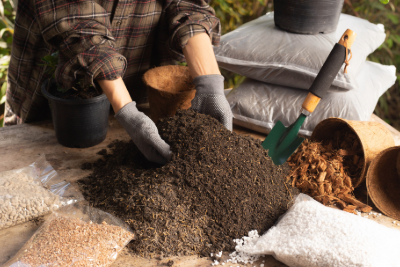
Why You Need to Add Nitrogen to Your Raised Garden Bed
And How to Do It Right!
By Kamron Zarrabi
Nitrogen plays an important role in gardening, yet its management and application remain largely misunderstood. At SPV Soils, we specialize in a wide range of custom soil mixes, from our raised garden bed mix designed for container growing, to our amended topsoil blend for in-ground applications where gradual nutrient release and improved soil structure are the priority. Many customers are surprised to learn that soil mixes containing composted organic matter may still require supplementing with nitrogen. Let’s explore why we recommend supplemental nitrogen and why it is not already present in our mixes.

Soil is Alive and it’s hungry for Nitrogen!
Healthy soil isn’t just dirt. It’s actually a living ecosystem packed with billions of microorganisms that are constantly breaking down organic matter and building up soil structure. This process is essential for long-term soil health, but it comes with a catch… those microbes need nitrogen to do their work, and they are very good at claiming it before your plants ever get the chance!
This brings us to one of the most important concepts in soil science: the carbon-to-nitrogen ratio, or C:N ratio. Organic materials in soil contain both carbon and nitrogen, and the ratio between the two determines how microbes interact with that material. When there is significantly more carbon than nitrogen present, microbes begin pulling available nitrogen out of the surrounding soil to fuel their own activity. This phenomenon is known as nitrogen drag, and it can leave your plants starved of the essential nitrogen they need to grow… even in a rich, well-composted mix.
We’ve got Phosphorus and Potassium in the Mix
Our raised garden bed mix contains quality tested compost which provides a solid foundation of nutrients, particularly phosphorus and potassium. These nutrients are relatively stable in compost and don’t deplete quickly. Nitrogen, however, is a different story.
So why isn’t there enough nitrogen in our mix?
Nitrogen in its most plant-available forms is highly water-soluble and chemically volatile, meaning it doesn’t stick around. Every time water moves through a raised bed, it carries soluble nitrogen out with it, a process called nitrogen leaching. Some forms of nitrogen can also be more volatile, converting to ammonia gas and evaporating into the air when exposed to heat or fluctuating moisture.
Between the time a mix is blended, purchased and planted, much or all of the pre-added nitrogen could already be gone. Pre-blending nitrogen into our mixes not only increases the cost of our blend, but would also give customers a false sense of security while delivering diminishing and unreliable amounts of actual nutrition.
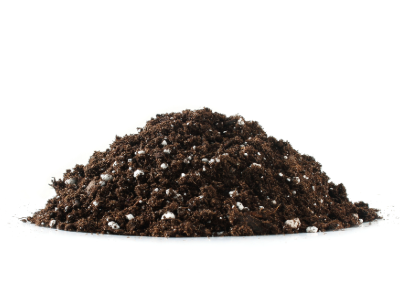
Bagged soil is not the answer!
Bagged soils can be expensive and their nitrogen content can be very inconsistent, varying from batch to batch based on manufacturer recipes and raw ingredient availability. Many bagged products are largely composed of ground bark or wood fines, which tend to have a lot of carbon with an unfavorable C:N ratio.
Those high-carbon materials create more microbial demand for nitrogen, pulling it away from your plants before they ever have a chance to use it. Combined with the rapid leaching that occurs in any raised bed environment, bagged soil will still require nitrogen supplementation for optimum plant development. This often comes at a much greater cost, sometimes exceeding $200 per cubic yard as compared to our Raised Garden Bed Mix which is currently priced at $52 per cubic yard (price can vary).

Our Recommendation
Supplement our Raised Garden Bed Mix with nitrogen when planting to ensure that your crops will receive its benefits. We offer two kinds for sale.
For an immediate nitrogen boost, we recommend ammonium sulfate. It is fast-acting, highly soluble, and will become available to plants quickly. It’s ideal for getting a new bed started, correcting a visible deficiency mid-season, or feeding heavy crops during peak growth. One note of caution: overapplying this fertilizer can damage seedlings and other salt sensitive plants, so always make sure to follow the recommended application rate for the product.
Feather meal is our organic alternative for long-term, sustained nitrogen supply. It breaks down slowly as microbes digest it, releasing nitrogen gradually over several months and is safe to use for application on young seedlings and salt sensitive plants. It’s well-suited for gardeners who prefer a more hands-off approach managing perennial beds, or planting seeds as opposed to transplants.
For most gardens, a combination of both is preferred. Incorporated feather meal when planting for season-long baseline nutrition and add ammonium sulfate as a targeted supplement when plants show signs of deficiency like yellowing leaves, slow growth, or pale coloration.
The Bottom Line
Nitrogen is the nutrient your garden will ask for most, and it’s the one most likely to disappear before your plants can use it. Between microbial competition, leaching, and volatilization, no bulk soil mix can reliably hold onto pre-added nitrogen long enough to matter.
We prefer to give our customers the full picture: We offer a quality soil mix foundation, with nitrogen options for based on your needs. Not sure what you need? Stop by the office or email us. We’re happy to help you figure out the right approach for your garden.
Read “Create a Super Garden with Raised Garden Bed Mix” for more information.
Learn more about why bagged soil isn’t always a reliable option in the article, “Ask a Master Gardener – What’s in your Bag of Potting Soil?“, by WSU Extension – Skagit County.
Happy Gardening!